Power flickers are more than an inconvenience when you live on an island grid. After the August 2023 Lahaina fire, many Haiku homeowners started asking how to keep the fridge cold, the Wi‑Fi on, and medical devices powered during outages or planned shutoffs. If you are considering solar plus a battery, you want simple answers about programs, sizing, costs, and what works in Haiku’s climate. This guide explains your options and how to design a system that keeps your essential loads running with confidence. Let’s dive in.
Why backup power matters in Haiku
Haiku sits on an islanded grid that operates differently than large mainland systems. Capacity and reliability constraints affect interconnection, export rules, and any battery programs that rely on customer devices. That means you should expect more restrictive rules and plan your system carefully.
Wildfire risk and extreme weather have shifted the conversation toward resilience. Public safety power shutoffs may occur during high‑risk conditions, and outages from storms can happen with little notice. On‑site backup helps you ride through these events with less stress.
Typical homes in Haiku focus on essentials: refrigeration, lighting, communications, medical devices, and water pumps if you rely on a well. The warm, humid climate also makes de‑humidification and ventilation important for health. The good news is that Haiku’s abundant sun can help recharge a battery during daytime outages if your solar is configured for backup.
Battery program types and incentives on Maui
Availability changes, so confirm current rules, paperwork, and timelines with the appropriate agencies before you commit.
Federal incentives
- Residential Clean Energy Credit: Under current IRS guidance, eligible residential solar energy property and qualifying batteries may receive a federal tax credit. Many systems have qualified at 30 percent in recent years under the Inflation Reduction Act. Confirm whether your battery needs to be charged by solar and how stand‑alone storage is treated. Speak with a tax professional about your situation.
State and local incentives
- Hawaii state programs: The Hawaii State Energy Office and related agencies publish policy and program summaries. Battery‑specific rebates have been limited, so verify the latest offerings for Maui.
- County offerings: Maui County sometimes runs resilience or retrofit programs, including targeted assistance for certain households. Funding and availability can change on short notice.
Utility programs and tariffs
- Grid services and demand response: Utilities in Hawaii have been developing programs that use distributed batteries to support the grid. These may offer payments or bill reductions when your battery provides capacity during utility events. Program names, compensation, and eligibility vary. Confirm current options and interconnection requirements with Hawaiian Electric.
- Interconnection and export rules: Hawaiian Electric has specific protocols for solar plus storage. Anti‑islanding is required during outages, and export limits can apply. Expect a formal application and possible hardware or configuration requirements.
- Emergency or priority reconnection: Ask Hawaiian Electric about any programs for customers with critical medical needs and how storage may fit into those policies.
Installer and manufacturer promotions
- Short‑term rebates or bundled discounts are common. These are commercial offers, not government programs, and can change quickly.
- Financing options may include home equity loans or solar loans through installers. Confirm availability and terms in Maui County.
Community pilots and resilience hubs
- Community microgrids and resilience hubs sometimes provide grants or subsidized storage for critical facilities. These are limited and announced locally.
How solar batteries keep essentials on
Solar and storage can be configured to keep your most important circuits powered when the utility goes down. Your design choices determine how long you can ride through an event and how much the system costs.
Choose your backup design
- Critical‑loads backup: Powers selected circuits such as the refrigerator, lights, Wi‑Fi, a medical device, and a water pump. Pros: smaller battery and lower cost. Cons: not whole‑house.
- Whole‑house backup: Sizes the battery, inverter, and transfer gear to run the entire home. Pros: convenience and full coverage. Cons: higher cost and larger solar array often needed to recharge.
- Self‑consumption focus: Uses the battery mainly to shift solar to evening to reduce bills. It can provide short backup but may not be configured for extended outages unless you set it up that way.
Size your storage
- Small backup, about 5 to 10 kWh usable: Covers essentials for several hours and possibly up to a day with careful use.
- Medium backup, about 10 to 20 kWh: Extends essential loads through most of a day and allows daytime solar to top up during repeated outages.
- Large backup, 20 kWh or more: Approaches whole‑house coverage for many single‑family homes, or multi‑day resilience when paired with enough solar or a generator.
- Match capacity to your outage profile: For planned daytime shutoffs, a smaller battery that recharges under the sun may be enough. For multi‑day disasters, larger storage or a generator is usually needed.
Right‑size your solar array
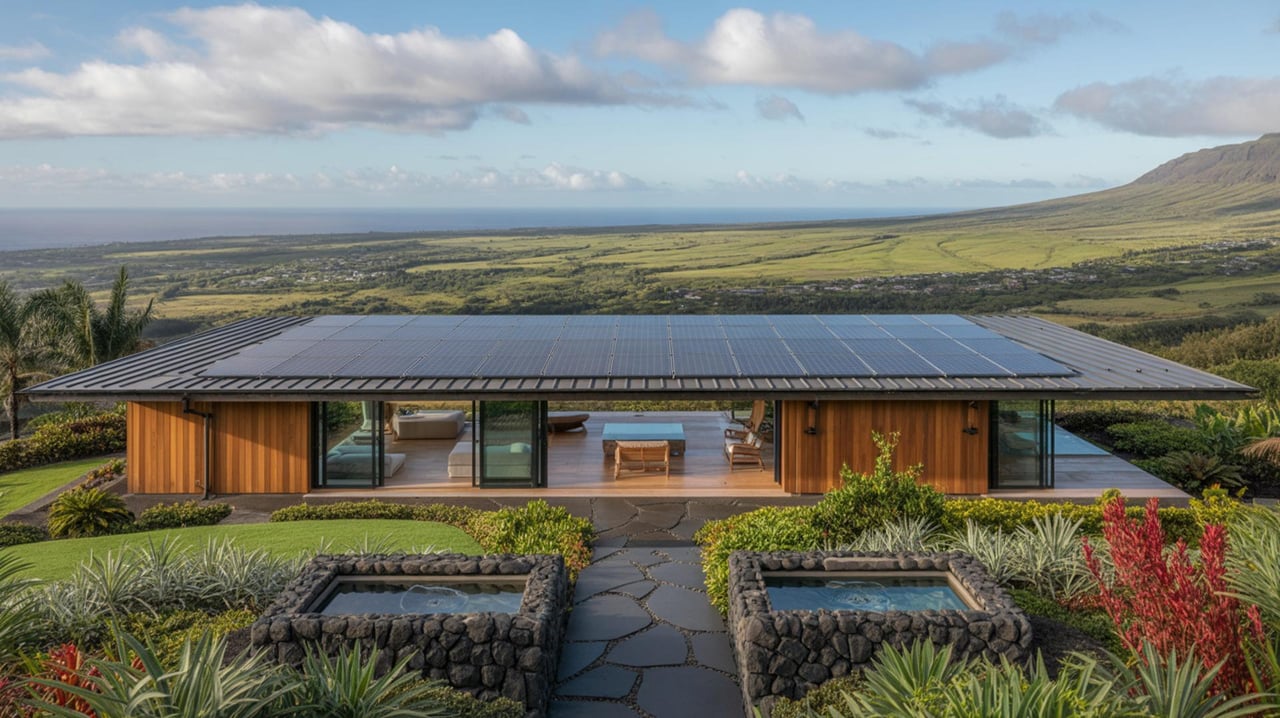
Solar must recharge the battery between outages. As a rule of thumb, a 13.5 kWh usable battery may need roughly 14 to 18 kWh of solar production in a day to fully recharge after losses. The number of panels depends on your roof tilt, orientation, and shading. Haiku’s sun is a plus, but trees and terrain can reduce production, so a site assessment matters.
You will see two common architectures:
- DC‑coupled systems integrate the battery with a single inverter for slightly higher charging efficiency from solar.
- AC‑coupled systems are typical when you add storage to an existing solar system and can be flexible for retrofits.
What happens during an outage
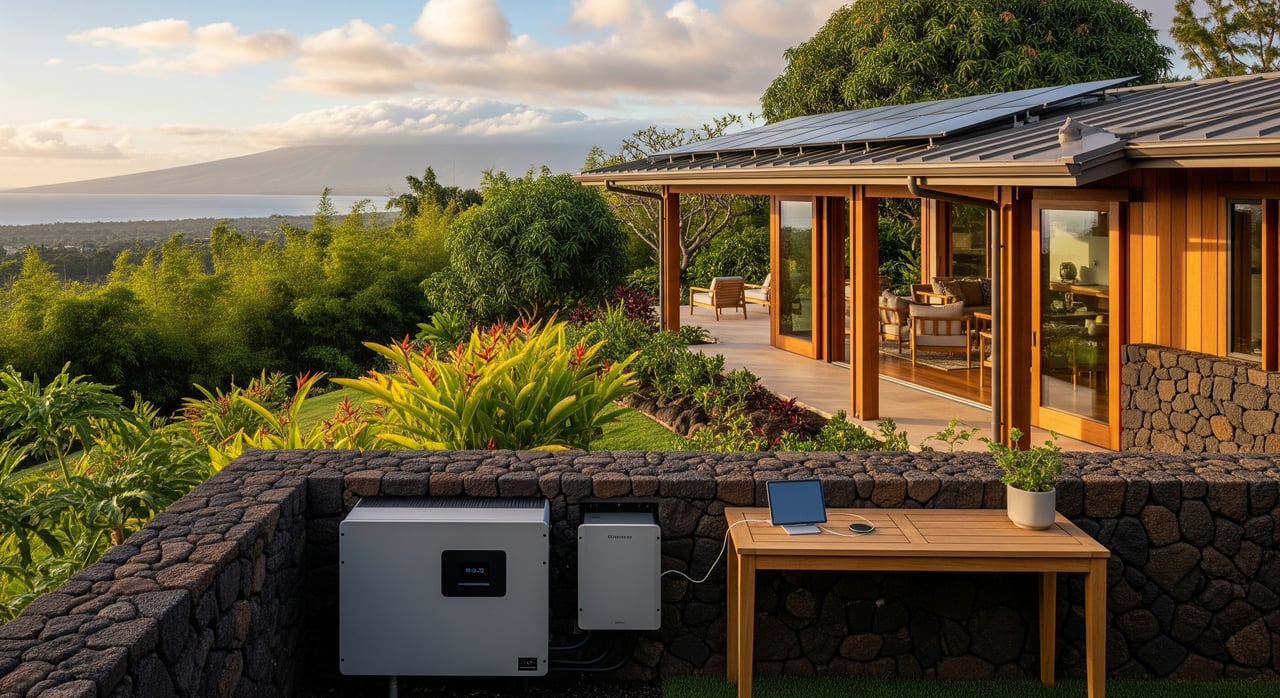
Most modern systems use an automatic transfer switch to island your home from the grid and power your backup panel. There can be a brief transfer time. If you rely on sensitive medical equipment, consider an uninterruptible power supply as an extra layer.
Export is typically not allowed during outages, so your system should isolate from the grid. Confirm with Hawaiian Electric that your equipment and settings meet interconnection rules and any export limits during normal operation.
Typical device scale
Many residential battery packs offer usable capacities in the 10 to 14 kWh range per unit. You can often stack multiple units to reach the capacity you need. Ask your installer for product datasheets, warranty terms, and local service support.
Costs, value, and what to expect
Installed battery systems that include the battery, inverter, transfer gear, and labor commonly cost from the low tens of thousands to higher amounts, depending on size and complexity. Single‑pack systems often land in the range of about 10,000 to 25,000 dollars before incentives. Island transport, permitting, panel upgrades, and site conditions can add to cost, so get multiple local quotes.
Incentives can materially reduce your net cost. If you qualify, the federal tax credit can be significant. Confirm eligibility with a tax professional and verify all program rules before you sign a contract.
From a real estate perspective, solar plus storage is increasingly attractive to buyers where reliability matters. On Maui, the visible benefits during outages can support demand. Exact price impact varies by property and market timing, so keep documentation ready. Permits, inspections, interconnection approvals, and transferable warranties all help with marketability when you decide to sell.
Safety, code, and insurance
- Permits and inspections: Expect building and electrical permits in Maui County. Reputable installers handle these, and you should receive copies.
- Fire safety: Lithium‑ion systems must meet relevant safety standards and codes. Ask about UL 9540 or similar certifications and any spacing or placement requirements.
- Insurance and maintenance: Inform your insurer and keep records of permits and inspections. Typical warranties run 5 to 15 years, and usable life often spans about 10 to 15 years depending on cycling and climate.
Installation and operation tips
- Site assessment: Review shading, roof orientation, and approved mounting locations. Coastal salt air can influence hardware choices and corrosion protection.
- Critical load panel: Decide which circuits you want on backup and confirm proper sizing and wiring by a licensed electrician.
- Monitoring and controls: Most systems include apps for state of charge and load management. Utility programs may require specific telemetry.
Quick action plan for Haiku homeowners
- Confirm Hawaiian Electric interconnection rules and any current grid services or rebate programs.
- Get 2 to 3 local quotes that include battery sizing for your backup priorities, automatic islanding, permitting costs, and estimated solar recharge time.
- Check federal tax credit eligibility with a tax professional and verify battery qualification.
- Ask about coastal‑grade hardware, warranties, monitoring, and safety features. Request copies of permit applications and interconnection paperwork.
- Choose between critical‑loads and whole‑house backup and size to your budget and expected outage duration.
Your next step
If you are weighing solar plus storage for comfort, health, and long‑term value, local guidance matters. A well‑documented, permitted system can support daily quality of life and future marketability. If you want to align resilience upgrades with a larger plan to buy, sell, or renovate on Maui, our team is here to help you think it through and connect you with trusted local resources.
Ready to talk through options for your home and neighborhood goals? Reach out to Unknown Company for a friendly consultation and request a free home valuation.
FAQs
Will Hawaiian Electric pay me for using my home battery in Haiku?
- Hawaiian Electric has been developing programs that use customer batteries to provide grid services. Eligibility, compensation, and requirements vary, so confirm current Maui offerings and interconnection rules before assuming payments.
Do I need rooftop solar to claim a battery tax credit?
- Under current federal guidance, batteries that are installed with and charged by qualifying solar can be eligible for the Residential Clean Energy Credit. Rules can change, and stand‑alone batteries may be treated differently. Consult a tax professional.
How much battery storage do I need for outages in Haiku?
- For essentials like refrigeration, lights, Wi‑Fi, and a medical device, 5 to 10 kWh may cover hours to a day. For multi‑day events, plan for 20 kWh or more, or pair the battery with a generator and manage loads carefully.
Will a solar plus battery system work automatically during a power outage?
- Many systems can island automatically with an approved transfer switch and backup panel. Confirm your equipment includes automatic transfer and that it is permitted and approved by the utility.
Are home batteries safe in Maui’s climate?
- When installed by licensed professionals to code and with required permits, home batteries are broadly safe. Ask about safety certifications, placement, ventilation, and monitoring, and inform your insurer once the system passes inspection.